What to do when you get a burn in Kenya – First Aid Guide
June 12, 2026How To Manage Burn Blisters
June 12, 2026Burns Society of Kenya — Clinical Practice Guidelines Based on British Burn Association First Aid Guidelines (2018) & ABLS Standards
1. THERMAL BURNS
Stop the Burning Process
- Remove the patient from the source of injury once the scene is safe
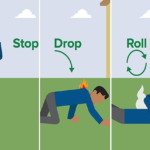
- Extinguish burning clothing with water or the Stop, Drop and Roll method
- Isolate electrical sources before attempting rescue
- Avoid chemical cross-contamination to rescuers
Remove Clothing and Jewellery
- Remove all burnt, contaminated, damp, or constricting clothing promptly
- Remove jewellery, nappies, and contact lenses near the burn
- Leave any clothing that is melted or adherent to the skin — do not pull it off
Cool the Burn
If water is available:
- Begin cooling immediately — do not delay
- Cool running tap water for 20 minutes, commenced within 3 hours of injury
- Do not exceed 20 minutes of active cooling — risk of hypothermia, especially in children, the elderly, and large burns
If water supply is limited:
- Apply a cool, wet, lint-free compress and change it frequently over 20 minutes
- If no water is available at all, cover with cling film and cool at the earliest opportunity within 3 hours
Do not use:
- Ice or ice-cold water — causes vasoconstriction and worsens tissue damage
- Toothpaste, butter, ghee, cooking oil, flour, or any traditional topical remedy
Warm the Patient
- Cool the burn, but warm the patient
- Cover all non-burnt areas to prevent hypothermia throughout the cooling process
- Children and the elderly are at highest risk of hypothermia and require active warming
Cover the Burn
- Cover the cooled burn with loose longitudinal strips of cling film, or a clean lint-free non-adherent dressing
- Do not wrap cling film circumferentially around limbs
- Do not apply cling film to facial burns
2. CHEMICAL BURNS
Early and sustained decontamination is the priority — duration of chemical contact directly determines burn severity.
- Wear PPE before assisting to prevent rescuer cross-contamination
- Brush off any dry powder or solid chemical fragments before wet decontamination
- Remove and safely discard contaminated clothing
- Irrigate immediately with cool running water, normal saline, or Hartmann’s solution for a minimum of 20 minutes
- Continue irrigation until pain subsides or the patient reaches a burn specialist
- Do not attempt to neutralise the chemical — this causes an exothermic reaction and worsens injury
- Do not irrigate dry lime, phenols, concentrated sulphuric acid, or elemental metals with water
- Where available, consult a poisons/toxicology reference for agent-specific management
3. ELECTRICAL BURNS
- Confirm the power source is isolated before approaching the patient
- Manage life-threatening conditions first per standard ATLS protocol
- Cool the entry and exit wound sites with cool running water for 20 minutes within 3 hours
- Monitor cardiac rhythm — if there is no history of loss of consciousness, cardiac arrest, or dysrhythmia and ECG is normal, prolonged cardiac monitoring is not mandatory
- Always transfer to facility capable of full assessment — electrical burns frequently have deep internal injury disproportionate to the surface wound
4. TAR AND BITUMEN BURNS
- Cool the tar and the wound with cool running water for 20 minutes within 3 hours
- Do not attempt to remove hardened tar in the field
- Once cooled, tar removal can be deferred to a burns unit using liquid paraffin or oily solvent — it is not an emergency
5. COLD BURNS / FROSTBITE
Uncommon in Kenya but relevant in highland and high-altitude environments (Mt. Kenya, Aberdares)
- Prioritise management of hypothermia and major trauma before addressing local cold injury
- Begin rewarming only if refreezing during transit can be prevented — refreezing causes significantly worse tissue damage
- Rewarm in circulating water at 37–39°C with a mild antibacterial agent (povidone-iodine or chlorhexidine) for at least 30 minutes within 12 hours of injury
- Do not use dry heat, massage, or apply pressure to the affected area
- Elevate the injured area to reduce swelling
6. CRITERIA FOR URGENT TRANSFER TO A BURN FACILITY
Transfer urgently to a burns-capable unit when:
- Total body surface area burn is significant or difficult to estimate in the field
- Burns involve the face, hands, feet, genitals, perineum, or major joints
- The burn appears deep (white, waxy, brown, black, or painless)
- The patient is a child under 5 or an elderly adult
- The burn was caused by electricity or chemicals
- There are signs of inhalation injury (singed nasal hair, hoarse voice, carbonaceous sputum, respiratory distress)
- Circumferential burns of the limbs or chest are present
- The patient has significant comorbidities
KEY REMINDERS FOR PREHOSPITAL PROVIDERS
| ✅ DO | ❌ DO NOT |
|---|---|
| Cool with running water for 20 minutes | Use ice, iced water, or cold packs directly |
| Warm the patient while cooling the burn | Cover the entire patient with wet material |
| Remove loose clothing and jewellery | Pull off adherent or melted clothing |
| Cover with cling film or clean lint-free dressing | Apply toothpaste, butter, oil, or any home remedy |
| Seek urgent transfer for high-risk burns | Delay transfer to attempt wound management in the field |
| Wear PPE for chemical burns | Neutralise chemicals on the skin |
Burns Society of Kenya Developed in alignment with: BBA First Aid Clinical Practice Guidelines (2018) | ABLS Handbook (ABA, 2011)
Let me know if you’d like this formatted for a training handout, a wall poster for a casualty department, or broken down into a community health worker version.
Sonnet 4.6 Low